









DPDP and Data Center Compliance in India: A 2026 Checklist for CIOs

The Digital Personal Data Protection (DPDP) Act has redefined accountability for organizations that collect, process, store, or manage personal data in India. As India’s data protection framework moves toward operational implementation, enterprises must be able to demonstrate how privacy and security controls work across the entire data lifecycle from collection and processing to retention and deletion.

For CIOs, that shift moves compliance out of the legal function entirely. It now directly influences technology strategy, infrastructure investment, and how enterprise risk gets priced in.

As cloud adoption, AI initiatives, and digital transformation accelerate, the infrastructure underneath these workloads carries more compliance weight than ever. Regulatory readiness now extends beyond applications and security controls to include where data physically resides, how it’s protected at the infrastructure layer, and how fast an organization can respond when something goes wrong. A complete DPDP compliance checklist India needs to combine governance, cybersecurity, and infrastructure readiness – treating all three as one continuous system, not three separate audits.

Checklist for CIOs

1. Build a Strong Data Governance Framework: Governance starts with visibility. Organizations need to understand what personal data they collect, why they collect it, where it resides, how it moves across systems, who has access to it, how long it is retained, and with whom it is shared. A working DPDP data governance checklist gives organizations a line of sight into data flows across hybrid and multi-cloud environments, which is what actually reduces unnecessary data exposure, not policy documents alone.

2. Strengthen Security Controls: No single control protects personal data; layered security does. Encryption at rest and in transit, role-based access control, identity and access management, multi-factor authentication, and continuous monitoring form the baseline. The more durable shift is embedding privacy-by-design into applications and infrastructure from the start, so compliance is architected in rather than patched on after the fact.

3. Enable Consent and Data Subject Rights: The DPDP Act puts real weight on valid consent and an individual’s right to act on their own data. Meeting that bar requires purpose-built mechanisms to capture, manage, and audit consent, alongside streamlined workflows for access, correction, and deletion requests. A practical Digital Personal Data Protection Act checklist automates these workflows – manual processes don’t scale, and they’re where compliance gaps tend to appear first.

4. Prepare for Security Incidents: Threats are evolving faster than most incident response plans. Organizations need continuous monitoring, active threat detection, dedicated security operations, and incident response plans that are tested, not just written. Clear escalation procedures shorten the distance between detection and containment, limiting business disruption while keeping organizations aligned with regulatory reporting timelines. This is now core to meeting DPDP requirements for CIOs, not a downstream IT concern.

5. Evaluate Infrastructure Compliance: Compliance is only as strong as the infrastructure it sits on. CIOs should be evaluating redundant power and connectivity, physical security, disaster recovery capability, environmental controls, and internationally recognized certifications as compliance criteria, not just uptime metrics. Data location and cross-border processing should also be evaluated against applicable legal, regulatory, contractual, and sector-specific requirements. Rather than assuming that all personal data must remain within India, organizations should establish clear visibility and governance over where data is stored, processed, backed up, and transferred.

Enabling DPDP Readiness with Yotta

While governance policies define compliance objectives, the right infrastructure partner helps organizations operationalize them. Yotta’s hyperscale data centers are designed to support enterprise compliance by combining resilient infrastructure with security-focused operational practices. Its portfolio includes Yotta NM1 in Navi Mumbai, Yotta D1 in Greater Noida, and Yotta G1 in GIFT City, providing enterprises with highly available, carrier-neutral facilities backed by redundant power, cooling, and network connectivity.

Yotta also aligns its infrastructure capabilities with key provisions of the DPDP Act. It helps organizations protect sensitive data through encryption, role-based access controls, and data masking techniques. Its platforms support consent management, enable organizations to address data subject rights, provide continuous security monitoring for incident detection, facilitate compliant data localization, strengthen third-party risk management, and embed privacy-by-design principles into secure cloud environments. Together, these capabilities help enterprises advance Data center DPDP compliance India without adding unnecessary operational complexity.

In addition, Yotta maintains compliance with globally recognized standards, including ISO/IEC 27001:2022, ISO/IEC 27701, ISO/IEC 27017, ISO/IEC 27018, PCI DSS, RBI cybersecurity and data localization certifications, and MeitY empanelment.

For CIOs in 2026, the priority is to translate regulatory requirements into technology architecture, operational controls, infrastructure decisions, and measurable accountability.

Organizations that embed privacy, cybersecurity, resilience, and infrastructure governance into their technology strategy will be better positioned not only to address evolving DPDP requirements but also to build the trust and operational resilience required for cloud, AI, and the next phase of India’s digital economy.
Data Center Strategies for Accelerating AI Infrastructure Deployment and Capacity Growth

AI adoption across enterprises and governments has reached a point where the constraint is no longer algorithmic. Model architectures are increasingly open, talent is more distributed than ever, and ambition is in no short supply. What separates the organizations pulling ahead from those stuck in pilot purgatory is far more physical: compute, power, and space, provisioned at a density and speed that most legacy facilities were never engineered to handle. As generative AI, agentic systems, and large-scale inferencing move from experimentation to mission critical production, AI infrastructure deployment has become the real bottleneck – the variable that determines who ships and who waits. Solving it demands rethinking, from first principles, how data centers are planned, built, and scaled.

Rethinking Capacity Planning for an AI-First World

Traditional data centers were designed around predictable, steady-state enterprise workloads. AI breaks that model entirely. GPU clusters draw far more power per rack, generate significantly more heat, and are provisioned in large, lumpy increments rather than gradual growth curves. This is why data center capacity planning now has to start with compute density assumptions rather than square footage. Facilities need to plan for 30-100+ kW per rack instead of the 5-10 kW that sufficed for conventional servers, and they need power and cooling headroom built in from day one rather than retrofitted later. Capacity planning today is really workload planning – modeling how training and inference demand will evolve over 18-36 months and designing shell, power, and cooling capacity to match, not lag, that curve.

GPU Scaling Strategies That Hold Up

Making GPUs perform at scale is where most deployments fall short. Effective GPU scaling strategies depend on high-bandwidth interconnects – InfiniBand or equivalent RDMA fabrics – that let clusters scale from a handful of GPUs to several hundred without a drop in throughput. Orchestration matters just as much as hardware: workload schedulers, tensor and pipeline parallelism, and fault-tolerant cluster management determine whether additional GPUs translate into proportional performance gains or diminishing returns. Facilities and platforms that are architected for linear scalability, rather than bolting GPUs onto general-purpose infrastructure, are the ones delivering benchmark-level performance in production rather than just on paper.

Accelerating AI Workload Deployment Without Sacrificing Reliability

Accelerating AI workload deployment means shrinking the time between “we have a model” and “the model is serving production traffic.” This is achieved through pre-configured, purpose-built environments: bare-metal GPU servers with no virtualization overhead for training, serverless GPU inferencing for elastic, pay-per-use deployment, and container-native orchestration that lets teams move from proof-of-concept to production without re-architecting infrastructure at each stage. Organizations that treat deployment as a modular pipeline – ingestion, training, fine-tuning, inference – rather than a single monolithic build consistently deploy faster and iterate more freely.

Edge and Chip-Level Scaling for the Next Phase

As AI moves from centralized training to distributed inferencing, edge AI deployment architecture is becoming essential for latency-sensitive applications – from real-time analytics to on-site decision-making – that can’t tolerate round-trips to a centralized data center. The underlying hardware layer keeps evolving, and AI chip infrastructure scaling – moving from one GPU generation to the next without re-architecting facilities each time – is now a core design requirement. Infrastructure built with generational flexibility avoids costly rebuilds every time a new chip architecture arrives.

Built for AI Infra at This Scale: Yotta Data Centers

For organizations trying to execute on these strategies, the biggest advantage Yotta’s data centers offer is peace of mind at scale. A 100% uptime commitment across fault-tolerant, highly certified facilities means AI training runs and production inference workloads don’t get interrupted by the infrastructure underneath them. 

This is the foundation Shakti Cloud runs on – India’s sovereign AI cloud platform, built on the country’s largest NVIDIA GPU footprint. The result is speed without compromise. Enterprises, researchers, and startups can scale from a single GPU workspace to large bare-metal and cluster deployments without losing performance at any stage, so growing AI ambitions never force a re-architecture. And because Shakti Cloud runs entirely within Yotta’s sovereign data centers, compliance with Indian data residency requirements comes built in.

As AI adoption accelerates, infrastructure will increasingly define competitive advantage. Organizations that invest in scalable, AI-native data center strategies today will be better positioned to deploy faster, innovate continuously, and unlock the full potential of AI without the complexity and operational burden of building that infrastructure themselves.

Inside AI’s Engine Room: High-Performance Data Centers

AI today operates at a scale and intensity that traditional infrastructure was never designed to handle. Training large models, running continuous inference, and processing massive datasets in real time demand a fundamentally different kind of backbone. This is where AI data centers come in – engineered not as passive hosting environments, but as tightly integrated compute ecosystems. These high-performance data centers are built to sustain extreme GPU density, high-throughput data pipelines, and ultra-low latency communication, forming the core engine that powers modern AI systems. 

The Shift from Traditional to AI-First Infrastructure 

Conventional data centers were designed for predictable enterprise workloads – applications, databases, and storage. AI, however, introduces a fundamentally different paradigm. Training large language models, running real-time inference, and processing vast datasets require exponentially higher compute power and data movement. 

This has led to the rise of specialized AI workloads data center environments that are optimized for parallel processing, ultra-low latency, and high-density compute. These facilities are not just incremental upgrades – they are complete architectural overhauls designed to support AI at scale. 

Power Density Transformation: From 10 kW to 100 kW per Rack 

One of the most defining shifts in AI data center architecture is the dramatic increase in power density. Traditional data centers typically operated within a range of 5–10 kW per rack. However, the rise of GPU-powered AI workloads has pushed this to nearly 100 kW per rack, fundamentally changing how data centers are designed and operated. 

This increase is driven by high-density GPU clusters, where multiple GPUs are packed within a single rack to reduce latency and accelerate processing. Modern GPUs can consume up to 1.2 kW each, meaning that a single processor can account for a significant portion of an entire rack’s power consumption in legacy systems. 

This shift toward high-density data centers is not incremental – it is exponential, requiring complete redesigns of cooling systems, power infrastructure, and physical layouts to support next-generation AI workloads. 

GPU Data Center Architecture: The Core of AI Compute 

At the center of AI infrastructure lies the GPU. Unlike CPUs, which are optimized for sequential processing, GPUs excel at parallel computation – making them ideal for AI model training and inference. 

Modern GPU data center architecture integrates thousands of high-performance GPUs into interconnected clusters, often referred to as superclusters. These clusters are capable of handling massive AI workloads, enabling enterprises to train complex models faster and deploy them at scale. The ability to seamlessly scale GPU clusters from a few nodes to thousands – has become a defining feature of high-performance data centers. 

Liquid Cooling in AI Data Centers: Managing Extreme Heat 

The rise in power density has made liquid cooling in data centers a necessity rather than an option. Traditional air cooling systems are no longer sufficient to manage the heat generated by high-density GPU clusters. 

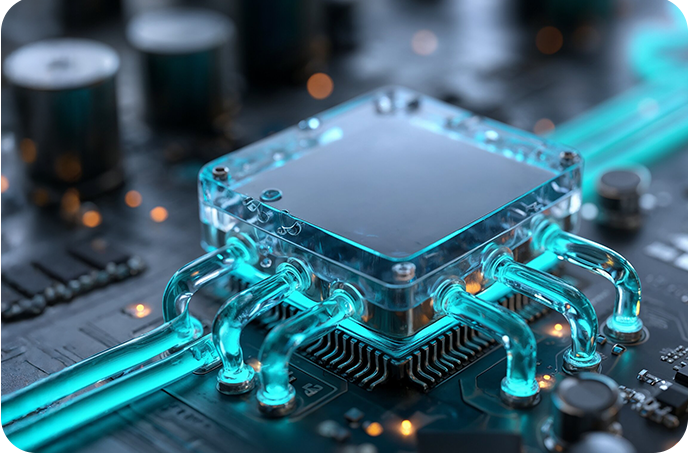
Liquid cooling technologies use water-based or refrigerant-based systems to efficiently dissipate heat, enabling AI data centers to sustain workloads operating at 100 kW per rack. Due to its superior thermal conductivity, liquid cooling allows data centers to operate at higher efficiency levels while maintaining optimal hardware performance. 

However, modern AI data center cooling systems are hybrid in nature. Even the most advanced deployments maintain a combination of liquid and air cooling, often in an 80/20 ratio. While GPUs are primarily liquid-cooled, supporting infrastructure such as storage and networking components may still rely on air cooling. This hybrid approach ensures flexibility while supporting diverse AI workloads within the same environment.  

High-Speed Interconnects: Eliminating Bottlenecks 

In AI environments, raw compute capacity is only as effective as the fabric that binds it. Large-scale model training is inherently distributed – spanning hundreds or thousands of GPUs that must operate as a single logical system, continuously exchanging gradients, parameters, and intermediate states. This makes the interconnect layer a critical determinant of performance. Ultra-low latency, high-bandwidth networking fabrics – built on technologies like advanced InfiniBand and GPU-to-GPU interconnects – enable tightly synchronized compute, minimizing communication overhead and idle cycles. The result is a near-linear scaling of performance, where adding more GPUs translates directly into faster training cycles. 

Storage Built for AI Throughput 

AI workloads are driven as much by data movement as by compute, requiring storage systems that can match GPU speed and scale. From ingesting massive datasets to sustaining continuous training pipelines, performance must remain consistent under load. NVMe-based architectures deliver ultra-low latency and high IOPS, ensuring data is always available without bottlenecks. In AI data centers, storage is tightly integrated with compute, keeping pipelines saturated and GPUs fully utilized, ultimately accelerating training cycles and overall system efficiency.

Water Usage and Cooling Trade-Offs in AI Infrastructure 

The impact of AI data centers on water consumption is another important aspect of sustainability. While liquid cooling is widely used, it typically operates within closed-loop systems that do not significantly increase water usage.

At the facility level, cooling methods such as evaporative cooling and dry cooling present trade-offs between water and energy consumption. Operators must carefully balance these factors based on regional conditions, particularly in water-sensitive areas.

As AI infrastructure evolves, improvements in cooling efficiency may reduce reliance on water-intensive systems, further enhancing the sustainability of AI-ready data centers.

Powering AI at Hyperscale

AI training workloads run as long-duration, compute-intensive cycles where even brief interruptions can reset progress and incur significant cost. Power infrastructure, therefore, becomes a critical layer of resilience not just support. AI data centers are engineered with hyperscale power architectures, combining redundant utility feeds, advanced UPS systems, and distributed backup to ensure uninterrupted execution. This guarantees consistent uptime, enabling high-performance data centers to sustain continuous AI workloads without disruption.

Security and Sovereignty in AI Infrastructure

As AI becomes integral to national and enterprise operations, data security and sovereignty have taken center stage. Sensitive datasets, proprietary models, and critical applications must be protected at all levels.

A data center in India, for instance, must address regulatory requirements around data residency and governance. Sovereign AI infrastructure ensures that data remains within national borders while complying with local regulations. Combined with multi-layer security – from biometric access controls to 24×7 monitoring – these facilities provide a secure foundation for AI innovation.

The Indian Context: Building for Scale and Sovereignty

India is witnessing a surge in AI adoption across sectors, driving demand for advanced infrastructure. The emergence of AI data centers in the country reflects a broader shift toward self-reliance in digital capabilities.

A modern data center in India is no longer just a hosting facility it is a strategic asset that enables enterprises, startups, and government bodies to build, train, and deploy AI solutions at scale. With increasing focus on sovereign AI, the role of localized, high-performance infrastructure is becoming even more critical.

Yotta Data Center: Powering India’s AI Ambitions

At the forefront of this transformation is Yotta, which operates one of the most advanced AI-ready infrastructures in the country. Yotta’s AI ecosystem is powered by GPU-driven superclusters, with thousands of NVIDIA H100 GPUs already operational, complemented by L40S GPUs for graphics-intensive workloads and upcoming next-gen Blackwell GPUs to support future AI models. This robust GPU data center architecture is enhanced by ultra-low latency networking, enabling seamless distributed training at scale. High-speed NVMe-based storage ensures that data-intensive AI applications – from large language models to real-time analytics – run without bottlenecks.

Through Yotta’s AI Cloud – Shakti Cloud, businesses can tap into AI workloads capabilities on demand – without needing to build or manage their own infrastructure. It combines high-density GPU clusters, ultra-fast networking, and high-performance storage into a unified AI platform, purpose-built for training, fine-tuning, and deploying AI models at scale.

Shakti Cloud operates within India’s borders, aligning with data sovereignty and compliance requirements while delivering global-scale AI performance. Together, Yotta’s underlying infrastructure and Shakti Cloud offering create a tightly integrated ecosystem – positioning it as a key enabler of India’s rapidly evolving AI landscape.

Modeling Heat Loads for Next-Generation Cooling Design

As digital infrastructure scales to support AI training clusters, GPU-dense architectures, and real-time analytics, thermal engineering has become one of the most critical design layers in modern facilities. Heat is no longer a byproduct to be removed, it is a dynamically modeled variable that directly influences compute stability, energy efficiency, and hardware longevity. Increasing rack densities, often exceeding 30–100 kW per rack in advanced deployments, have made traditional rule-of-thumb cooling approaches obsolete. 

Modern environments require tightly coupled interaction between IT load forecasting and thermodynamic design, where power draw, airflow resistance, and temperature gradients are continuously evaluated together. This has elevated heat load modeling data center methodologies into a core engineering discipline rather than a secondary planning step. 

Advanced Principles of Heat Load Modeling 

At a technical level, heat load modeling is the process of quantifying spatial and temporal heat dissipation across IT infrastructure under variable workload states. It integrates electrical load modeling (W → BTU/hr conversion), airflow modeling (CFM distribution), and thermodynamic mapping of supply and return air temperatures. 

Modern models incorporate: 

1. Transient thermal analysis, accounting for workload spikes in GPU clusters  

2. Zonal heat mapping, dividing data halls into micro-thermal regions rather than uniform zones  

3. N+1 and N+2 redundancy impact modeling, ensuring cooling resilience under partial system failure  

4. CFD-based simulations (Computational Fluid Dynamics) to model turbulence, recirculation, and bypass airflow  

From Static Cooling Assumptions to Dynamic Thermal Intelligence 

Traditional data center cooling design assumed uniform load distribution and steady-state heat generation. However, GPU clusters and AI inference engines introduce highly non-linear heat patterns. Workloads can shift within seconds, creating localized thermal spikes that standard HVAC logic cannot respond to in time. 

To address this, predictive thermal models now integrate: 

– Real-time telemetry from smart PDUs and rack sensors  

– Workload-aware scheduling inputs from orchestration layers  

– AI-driven predictive cooling algorithms  

– Heat reuse and recovery simulations for energy optimization  

This enables cooling systems to pre-emptively adjust airflow velocity, chilled water flow rates, and fan curves before thermal thresholds are breached. 

Multi-Physics Integration in Design Engineering 

Advanced facilities now treat cooling as a multi-physics problem involving thermodynamics, fluid mechanics, and electrical load balancing. In high-density environments, even minor inefficiencies in airflow containment can result in hot aisle recirculation or cold aisle contamination. 

Key design considerations include: 

– Pressure differential management between hot and cold aisles  

– Containment strategies (hot aisle or cold aisle containment structures)  

– Static vs variable airflow control using EC fans and VFD-driven systems  

– Rack-level thermal zoning, particularly in heterogeneous compute environments  

Managing Complexity in Colocation Environments 

In a colocation data center, thermal design becomes significantly more complex due to heterogeneous tenant workloads. Each tenant may deploy different hardware stacks – from low-density enterprise servers to high-density GPU clusters – resulting in uneven thermal footprints. 

To manage this, operators implement: 

– Tenant-level thermal segmentation  

– Dynamic cooling allocation based on real-time load  

– Independent airflow isolation zones  

– Advanced metering infrastructure (AMI) for heat and power correlation  

Evolution Toward Next-Generation Cooling Systems 

The limitations of air cooling in high-density environments have accelerated adoption of hybrid and liquid-based systems. These include rear-door heat exchangers, direct-to-chip liquid loops, and immersion cooling tanks – all of which require precise thermal modeling for deployment feasibility. 

Without accurate modeling, these systems risk underperformance due to improper flow rates, incorrect heat exchanger sizing, or inefficient coolant distribution paths. 

Yotta: Cooling Solutions for Modern IT Demands 

Yotta integrates advanced thermal engineering principles into its hyperscale infrastructure to support AI, HPC, and cloud-scale workloads. Its data centers are built with a multi-layered cooling architecture that combines efficiency, redundancy, and scalability. 

Air-cooled chillers with adiabatic systems form the foundational cooling layer, optimizing energy use while maintaining stable thermal conditions across varying ambient environments. CRAH and fan wall systems are deployed at data hall perimeters with redundancy, ensuring uninterrupted cooling even during maintenance events or partial system failures. Inrow cooling units are placed near IT racks, enabling localized thermal control for high-density equipment and reducing airflow losses across the hall. 

High-Density and Liquid Cooling Architectures 

To support next-gen compute workloads, Yotta has implemented advanced high-density cooling systems. Rear door heat exchangers are used to manage rack densities of up to 50–60 kW by capturing heat directly at the rack exhaust point. For even higher thermal loads, direct liquid-to-chip cooling systems – developed in collaboration with hardware manufacturers, support up to 80 kW per rack using centralized or rack-specific cooling distribution units. 

At the highest density tier, liquid immersion cooling systems provide near-total heat absorption efficiency, enabling safe and stable operation of ultra-high-performance compute clusters. Together, these systems ensure Yotta’s infrastructure remains future-ready, capable of supporting the evolving demands of AI model training, inferencing workloads, and large-scale distributed computing across India’s expanding digital ecosystem. 

The New Balance of Power, Cooling, and Compute in AI-First Data Centers 

The exponential growth of artificial intelligence is redefining the very foundations of digital infrastructure. Traditional data centers, long optimized for general-purpose computing, can no longer meet the scale and intensity of AI workloads. In India, the next wave of AI-ready data centers is being purpose-designed to manage enormous computational throughput, high-density GPU clusters, and ultra-fast, low-latency storage, while simultaneously prioritizing energy efficiency and operational resilience. These facilities are no longer just about space and power – they are complex ecosystems where power distribution, advanced cooling architectures, and scalable compute capacity must converge seamlessly. This infrastructure can meet the intense demands of AI training and inference, supporting faster and more efficient deployment of artificial intelligence. 

Managing Data Center Power Consumption 

AI workloads are energy-intensive. Training large models, running inference on massive datasets, and enabling real-time analytics require sustained high-power draw at scale. Data center power consumption has become one of the primary constraints in AI infrastructure planning. Modern AI-first data centers are engineered to handle dense GPU racks while providing robust redundancy through dual utility feeds, backup generators, and uninterrupted power supply (UPS) systems. Careful planning of electrical architecture ensures that peak computational demand does not compromise uptime, enabling enterprises to run AI workloads reliably while optimizing operational costs. 

Liquid Cooling for Data Centers 

One of the most significant innovations in AI infrastructure is the adoption of liquid cooling for data centers. Traditional air-based cooling systems often struggle to dissipate the heat generated by dense GPU clusters, leading to thermal hotspots and reduced equipment lifespan. Liquid cooling – whether direct-to-chip immersion, rear-door heat exchangers, or chilled-water systems – provides superior heat transfer, allowing high-density racks to operate efficiently. This technology not only improves performance for AI workloads but also reduces the overall energy footprint, helping operators achieve better PUE metrics. 

Integrating Compute, Cooling, and Energy Efficiency 

The challenge of AI-first data centers lies in harmonizing compute density, cooling efficiency, and power availability. AI data center infrastructure must support ultra-high-bandwidth networking, low-latency storage, and large-scale GPU clusters without compromising environmental performance. Energy-efficient data centers integrate smart cooling strategies, workload-aware power management, and advanced monitoring to optimize resource usage dynamically. Techniques such as cold aisle containment, variable-speed pumps, and adiabatic cooling allow operators to maintain consistent performance while minimizing energy and water consumption, making sustainability an integral part of AI infrastructure design. 

Modular and Scalable Approaches 

Modern AI workloads evolve rapidly, and data center architecture must keep pace. Modular design principles – enabling scalable racks, flexible power distribution, and adaptable cooling systems -allow data centers to expand incrementally as compute demand grows. By adopting a “compute-first” approach that considers power and cooling as inseparable design parameters, operators can maximize operational efficiency while ensuring that future AI applications can be deployed without costly retrofits or downtime. 

The Role of AI Data Centers in India 

India’s AI ecosystem is rapidly expanding, and the demand for purpose-built AI infrastructure is growing in parallel. AI data centers in India are not just supporting enterprise AI; they are enabling national initiatives in healthcare, finance, and government technology. As the country pursues leadership in AI-driven innovation, energy-efficient, resilient, and high-performance facilities are critical to sustaining growth. Operators must consider not only compute density but also the environmental and regulatory implications of high energy consumption, making sustainable cooling and power management a strategic priority. 

Yotta: Leading with Power, Cooling, and Compute Innovation 

Among India’s AI data center leaders, Yotta Data Centers exemplify the balance of power, cooling, and compute required for AI-first operations. Yotta’s facilities integrate advanced AI data center infrastructure, including high-density GPU clusters, ultra-fast NVMe storage, and low-latency networking, enabling enterprise-scale AI workloads with unmatched reliability. To address the challenge of energy and thermal management, Yotta deploys cooling innovations such as adiabatic chillers, rear-door cooling, direct-to-chip liquid cooling, and cold aisle containment. These technologies reduce both energy and water usage while ensuring optimal operating temperatures for dense AI clusters. By combining robust power systems, modular compute architecture, and sustainable cooling solutions, Yotta delivers energy-efficient data centers that are purpose-built for India’s AI ambitions, supporting everything from hyperscale cloud deployments to sovereign data initiatives. 

Looking Ahead: The Future of AI-Ready Infrastructure 

As AI continues to reshape industries and drive innovation, the role of purpose-built, energy-efficient data centers will only grow more critical. Success in this era requires facilities that seamlessly integrate power, cooling, and compute, while remaining adaptable to evolving workloads.  

In India, operators who prioritize resilient, sustainable, and high-performance AI infrastructure will not only meet the demands of today’s enterprises but also lay the foundation for the next generation of technological breakthroughs. By aligning design, operations, and environmental responsibility, AI-first data centers are poised to become the backbone of India’s digital future. 

Supercharging Data Center Construction in the Age of AI-Driven Infrastructure 

Artificial intelligence is transforming not only applications but the very infrastructure that powers them. The rise of AI workloads – ranging from large language model (LLM) training to real-time inference – has created new demands for AI-ready data centers that can support unprecedented levels of compute, storage, and networking performance. Unlike traditional IT workloads, AI requires tightly coupled GPU clusters, ultra-fast storage, and deterministic low-latency networks. 

According to Fortune Business Insights, the global AI data center market was valued at $17.73 billion in 2025 and is expected to expand from $21.27 billion in 2026 to $133.51 billion by 2034. This shift has turned data center construction from a purely operational exercise into a strategic initiative, directly impacting business competitiveness in an AI-driven world. 

Rethinking Colocation for the AI Era 

Colocation data centers have long been valued for providing secure space, power, and connectivity. Today, they must go further. Modern colocation environments are expected to host AI-optimized racks, support high-density GPU clusters, and offer direct access to cloud and network ecosystems. Enterprises increasingly view colocation as an extension of their core infrastructure a place where critical AI workloads can run efficiently without the overhead of managing a private data center. The ability to scale compute capacity on demand, coupled with secure, high-speed interconnects, is now a defining feature of colocation facilities in the AI era. 

Hyperscale Data Centers: Beyond Size 

The concept of the hyperscale data center has evolved from a mere physical scale to a philosophy of modularity, efficiency, and agility. Hyperscale facilities are engineered to handle tens of thousands of servers, thousands of GPUs, and petabytes of storage, all while maintaining predictable performance. For AI workloads, hyperscale architecture provides the flexibility to deploy GPU-powered superclusters, manage distributed training efficiently, and scale compute density rapidly. Standardized designs enable operators to expand capacity without extensive redesigns, ensuring that infrastructure keeps pace with rapidly evolving AI demands. 

Advanced Power and Cooling Solutions 

High-performance AI workloads have made data center power and cooling solutions critical to operational success. Traditional air-cooled designs often fail to meet the heat density of modern GPU clusters, necessitating innovations such as immersion cooling, liquid-cooled racks, and chilled-water systems. On the power side, dual-feed utility inputs, Tier III/IV redundancy, and integrated UPS + generator systems ensure continuous operation for mission-critical AI training and inference. Energy-efficient designs, including free-air cooling and intelligent PUE  optimization, allow data centers to maintain performance without compromising sustainability an increasingly important consideration in hyperscale infrastructure. 

Designing for AI Workloads 

Data center design for AI workloads requires foresight across multiple dimensions. Floor space must accommodate high-density racks with heavy load capacities. Network fabrics, including high-bandwidth NVLink and InfiniBand, must support massive parallel data flows. Storage systems need high IOPS and low-latency access to feed AI pipelines continuously. Finally, scalability must be embedded from day one, allowing AI clusters to grow from hundreds to thousands of GPUs seamlessly. This holistic approach ensures that the data center is not only AI-ready at launch but capable of adapting to next-generation AI architectures. 

Yotta: Powering India’s AI-Ready Data Centers 

In India, Yotta Data Centers exemplify the future of AI-ready and hyperscale infrastructure. With a portfolio spanning operational and upcoming facilities across the country, Yotta combines flexibility, security, and scalability to meet the nation’s growing digital demands. Its flagship NM1 facility in Navi Mumbai, Asia’s largest Tier IV data center, spans 820,000 sq. ft. with 7,000+ racks and a 52 MW IT load, designed for hyperscale growth to 1 GW. IGBC Platinum-rated and built with energy-efficient systems (PUE < 1.5), it provides high-density compute capacity, low-latency network access, and carrier-neutral connectivity for seamless AI operations. Yotta’s data center hosts thousands of NVIDIA H100 GPUs, with upcoming B200 GPUs ensuring readiness for next-generation model training and inference. High-speed NVMe storage, ultra-low latency networking, and high-density rack designs allow enterprises to scale AI clusters without disruption. 

Other Yotta facilities, including D1 in Greater Noida and G1 in GIFT City, extend the company’s footprint with Tier III+ and specialized hyperscale infrastructure, featuring advanced cooling systems, scalable power architecture, and district cooling integration.  

AI-Driven Innovation and Sovereign Infrastructure 

Yotta’s approach goes beyond hardware. Its AI data center infrastructure is sovereign by design, ensuring all workloads remain within India’s borders to meet compliance, data residency, and governance requirements. Advanced security layers—from biometric access to 24×7 SOC/NOC monitoring—protect sensitive AI workloads. With integration into the Yntraa Cloud platform, Yotta supports private, public, hybrid, and government cloud deployments, enabling mission-critical AI applications to run continuously with 99.999% uptime. By combining hyperscale power, advanced cooling, high-speed storage, and ultra-low latency fabrics, Yotta is not just building data centers—it is powering India’s AI ambitions city by city. 

Why AI’s Explosive Growth Makes Energy-Efficient Data Centers a Strategic Imperative 

Artificial intelligence is foundational to enterprise innovation. From large language models and real-time analytics to automation and personalisation, AI workloads are scaling across industries. This growth is not creating pressure on infrastructure – it is accelerating the evolution of energy efficient data centers, designed to support high-performance computing while maintaining operational stability and sustainability. 

As AI adoption deepens, data center efficiency is emerging as a strategic enabler of long-term scalability and business value. 

How Do AI Workloads Change Infrastructure and Power Requirements?

AI workloads consume significantly more power because they rely on densely packed GPUs operating continuously at high utilisation, unlike traditional enterprise applications that run intermittently. Unlike traditional enterprise applications with predictable and intermittent demand, AI training and inference require high-throughput storage, low-latency interconnects, and sustained GPU utilisation. This results in significantly higher AI power consumption, making power management a core design consideration rather than an operational constraint. 

To address this, modern data centers are built with power-aware infrastructure that aligns energy delivery directly with workload behaviour. Intelligent power distribution systems monitor IT load in real time, ensuring power is delivered precisely where and when it is required. This load-aware approach supports high-density racks while minimising energy waste, allowing compute capacity to scale without inefficiencies. 

Rather than focusing solely on adding electrical capacity, AI-ready facilities prioritise how efficiently power is converted into usable compute. By optimising power paths, reducing losses, and aligning delivery with application demand, data centers gain tighter control over data center energy usage. For enterprises, this translates into predictable operating costs, consistent performance, and fewer infrastructure bottlenecks as AI workloads scale. 

Why Data Center Efficiency Is Foundational to AI Readiness 

AI-ready infrastructure must scale without friction. Energy efficient data centers are engineered to support this by balancing performance, reliability, and sustainability. Efficiency-focused design enables higher rack densities, consistent uptime, and optimised operating costs – key requirements for AI production environments. 

Common characteristics of efficient AI-ready facilities include: 

1. Power delivery aligned closely to IT load 

2. Support for high-density racks without thermal compromise 

3. Advanced cooling architectures designed for continuous operation 

4. Modular infrastructure that scales incrementally 

These capabilities allow organisations to transition from AI experimentation to enterprise-wide deployment smoothly. 

Hyperscale and Colocation as Efficiency Enablers 

The global AI surge has reinforced the importance of the hyperscale data center, where efficiency is achieved through scale, automation, and purpose-built design. At the same time, many enterprises are choosing the colocation data center model to access similar levels of efficiency without owning and operating large facilities. 

Colocation environments provide shared access to optimised power, cooling, and physical infrastructure, enabling enterprises to deploy AI workloads faster while retaining operational control. This model also supports geographic flexibility, helping organisations position AI infrastructure closer to users and data sources. 

Sustainability and Performance Are Increasingly Aligned 

In AI-intensive environments, sustainability is emerging as an outcome of good systems engineering rather than a separate objective. As compute density increases, inefficiencies in power conversion, thermal management, or workload placement compound rapidly, affecting not only energy consumption but also performance stability and infrastructure lifespan. Addressing these inefficiencies improves system behaviour under sustained AI load. 

Advanced data centers increasingly optimise for effective compute per unit of energy rather than absolute power availability. This shifts design priorities toward tighter coupling between power delivery, cooling response, and workload orchestration. Closed-loop cooling architectures, higher operating temperatures where appropriate, and renewable-backed power procurement all contribute to smoother performance curves under variable AI demand. 

From an enterprise perspective, data center efficiency becomes a mechanism for risk management. Predictable thermal and power behaviour supports higher utilisation without increasing failure rates, while transparent energy metrics simplify compliance and reporting. In this context, sustainability does not slow AI adoption – it enables controlled, repeatable scaling of AI workloads over time. 

Yotta Data Centers: Enabling Efficient AI at Scale 

Yotta builds and operates India’s largest data center parks across strategic locations, purpose-built to support high-performance and AI-driven workloads. Yotta’s multi-tenant colocation data center facilities offer scalable, secure environments with a strong focus on data center efficiency. 

Yotta’s cooling systems are designed for long-term efficiency, not corrective retrofits. Closed-loop, air-cooled architectures using adiabatic and free-cooling significantly reduce water usage by minimising reliance on evaporative cooling for most of the year. For high-density AI racks, Yotta is rolling out direct-to-chip and immersion liquid cooling, both operating in sealed, closed-loop systems with near-zero water loss. 

Efficiency is reflected in Yotta’s facility design metrics. Yotta NM1 is designed for a PUE of 1.5, while Yotta D1 operates at a PUE of 1.4, enabling optimised data center energy usage without compromising performance or resilience. Combined with high-efficiency power delivery, redundant AC/DC supply modes, on-demand scalability, and 48-hour full-load backup, Yotta provides a stable foundation for AI growth.  Hosting Shakti Cloud within its facilities, Yotta enables organisations to build and deploy advanced AI models on Indian soil, backed by energy-efficient, future-ready data center infrastructure. Visit https://colocation.yotta.com/ 

How AI is Making Data Centers Think Like Systems, Not Buildings

With AI driving massive computational growth, data centers are evolving into intelligent ecosystems that optimise performance, energy, and connectivity automatically. Today’s AI-driven workloads demand more than just space, power, and cooling; they require intelligent, adaptive infrastructure that behaves like a dynamic system, responding in real time to compute, storage, and networking demands. As AI adoption accelerates, data center networking for AI workloads and infrastructure design are evolving to keep pace, fundamentally reshaping how organisations build, operate, and scale their facilities. 

Why are AI-driven data center networks critical for modern AI workloads? 

AI workloads are unlike traditional enterprise applications. Training large language models, running deep neural networks, and executing real-time analytics require extremely high-throughput data transfer and ultra-low latency connectivity between GPUs, storage arrays, and compute nodes. As a result, AI-driven data center networks are becoming intelligent, adaptive, and workload-aware. 

Modern data centers integrate AI algorithms to dynamically manage network traffic, balance load, and predict failures before they impact operations. These networks can automatically reroute data flows during peak periods, optimise resource utilisation, and ensure performance remains consistent even under unpredictable AI demand. This shift transforms networks from passive conduits into active systems capable of self-optimising for AI workloads. 

AI’s Impact on Data Center Infrastructure 

The influence of AI extends beyond networking. AI impact on data center infrastructure is evident in several critical areas: 

1. Power Management: AI workloads consume high-density compute power, which requires sophisticated power distribution and monitoring. AI-enabled systems can predict load patterns, adjust energy delivery in real time, and reduce energy waste. 

    2. Cooling Efficiency: Traditional cooling solutions are reactive, but AI-driven predictive cooling ensures optimal temperature and airflow, minimizing hot spots while reducing energy consumption. 

      3. Resource Scheduling: AI can orchestrate compute, storage, and network resources, ensuring the right capacity is allocated to workloads without over-provisioning. 

        4. Predictive Maintenance: Machine learning models analyse sensor data to forecast hardware failures, reducing downtime and improving operational reliability. 

          Colocation Data Centers and the AI Advantage 

          Not every organisation can build hyperscale AI-ready facilities. This is where colocation data centers become strategically important. Colocation enables enterprises to leverage shared, energy-efficient infrastructure with high-density networking, redundant power, and scalable compute resources, without the overhead of owning and maintaining a full-scale data center. 

          Key advantages of colocation for AI workloads include: 

          1. Rapid Deployment: Enterprises can colocate servers and GPU clusters immediately, avoiding months of construction and setup. 

          2. Scalability: Colocation allows incremental expansion, aligning infrastructure growth with AI workload demand. 

          3. Connectivity: High-speed interconnections to cloud services, Internet Exchanges, and multiple ISPs enable fast data transfer and hybrid AI deployments. 

          4. Operational Efficiency: Shared management of power, cooling, and security ensures optimised operations with lower energy and maintenance costs. 

          By adopting colocation, organisations can focus on AI innovation while leveraging sophisticated infrastructure optimized for AI workloads. 

          Data Center Services for AI-Optimised Operations 

          AI workloads demand intelligent data center services that enable seamless operations. Modern facilities now offer: 

          1. Advanced Monitoring: AI-driven telemetry tracks power, temperature, and network performance in real time. 

          2. Automated Orchestration: Resource scheduling, failover management, and network traffic routing are automated using predictive analytics. 

          3. Security Services: With AI analysing threats, data centers provide enhanced protection through continuous monitoring, anomaly detection, and threat mitigation. 

          4. Custom Fit-Outs: Flexible rack configurations and tailored support services accommodate unique AI infrastructure requirements, from dense GPU clusters to high-speed storage. 

          By combining these services with intelligent infrastructure, data centers are evolving from passive warehouses to proactive ecosystems capable of supporting high-performance AI workloads. 

          Why Thinking Like a System Matters 

          In a traditional data center, physical layout, racks, and cabling are the primary focus. AI workloads change that perspective. When data centers think like systems, they prioritise: 

          1. Dynamic Resource Allocation: Hardware, power, and network resources adapt in real time to workload needs. 

          2. Energy Efficiency: AI optimises energy delivery and cooling, balancing performance with sustainability. 

          3. Predictive Operations: Continuous data analysis anticipates bottlenecks, hardware failures, and network congestion. 

          4. Seamless Scaling: The facility expands capacity intelligently, reducing downtime and manual intervention. 

          This systems-level approach is essential for organisations running large-scale AI workloads, ensuring performance consistency, operational resilience, and cost predictability. 

          Yotta: Enabling AI-Ready Colocation 

          Leading organisations across industries rely on Yotta to host their critical IT infrastructure. Designed for AI-driven workloads, Yotta’s colocation facilities combine redundant power, dense network connectivity, and multi-layer security to deliver 100% uptime. With scalable rack space, hybrid cloud connectivity, and intelligent monitoring, Yotta ensures businesses can run high-performance AI operations without compromising on reliability or efficiency. 

          With Yotta’s infrastructure, enterprises gain access to purpose-built systems that adapt to AI demands, offering the flexibility, resilience, and efficiency required to scale AI initiatives on Indian soil. By choosing Yotta’s AI-ready colocation, companies can accelerate innovation while maintaining full control over their data and workloads.

          The Unseen Backbone of Every Uptime Metric: The Power of Colocation Operations

          Every time an online transaction completes instantly, a video call runs without interruption, or a cloud application responds in milliseconds, a complex network of physical infrastructure is working flawlessly in the background. This unseen layer, the foundation of the digital economy, is sustained by colocation data center operations. These facilities and their expert teams ensure that enterprises meet stringent uptime commitments through consistent data center uptime management, making sure every service performs seamlessly and securely.

          Where downtime can lead to lost revenue, damaged reputation, and disrupted business operations, maintaining continuous availability is paramount. Organisations can no longer rely solely on traditional server rooms or small-scale data centers. Instead, they turn to professional colocation operations like Yotta to handle the complexities of modern IT ecosystems, where latency, scalability, and reliability must align perfectly.

          Colocation Services for Enterprises

          Modern colocation setups are purpose-built for intensive workloads, AI models, and high-density GPU clusters. They enable enterprises to host critical systems in world-class facilities designed for maximum energy efficiency, operational sustainability, and robust data protection. These facilities combine advanced security measures, redundant power paths, and multiple network providers to deliver dependable operations that meet both enterprise and regulatory requirements.

          As workloads grow in complexity, colocation environments serve as an essential bridge to the cloud. Hybrid and multi-cloud strategies are easier to execute when colocated infrastructure directly connects to hyperscale providers. This integration allows businesses to blend the flexibility of cloud computing with the control and predictability of dedicated infrastructure, ensuring cost efficiency and consistent performance.

          Precision Behind Data Center Uptime

          Yotta’s data centers are designed around one core objective: to maintain the highest possible level of uptime. Achieving this goal involves more than redundant systems and backup generators, it requires an operational philosophy centered on proactive management. This includes continuous monitoring, predictive maintenance, and real-time analytics to anticipate potential issues before they impact performance.

          The teams that run these environments are specialists in data center uptime management. They oversee everything from power usage efficiency (PUE) to cooling optimisation, ensuring performance remains stable under all conditions. Even minor events, like voltage fluctuations or unexpected temperature spikes, are managed instantly through automated alerts and intervention protocols.

          The result of these efforts is consistent data center reliability and performance.

          The Scaling Advantage of Hyperscale and Colocation

          By leveraging colocation partnerships, businesses can deploy edge computing environments closer to their users, reduce latency, and maintain compliance with local data regulations. The ability to grow dynamically, supported by the physical robustness of a hyperscale-ready site, ensures businesses stay future-proof in an increasingly data-dependent world.

          Building Reliability Through Operational Excellence

          Facilities are managed with multi-layered redundancies across every system, power, cooling, security, and network links. Real-time analytics drive decision-making, while AI-based facility management tools improve efficiency, detect anomalies, and optimize resource utilisation. Every process, from energy management to cabling organisation, contributes to creating the reliable foundation that modern digital enterprises depend on.

          At Yotta, this operational rigor is quantified through tangible metrics: each facility supports over 7,000 racks, delivers up to 52 MW of IT power, and provides 4 diverse fiber paths to ensure network resilience. With a design PUE of 1.5, the data centers achieve optimal energy efficiency while maintaining peak uptime performance, embodying the precise engineering and management required for truly reliable colocation services

          How Data Centers Can Attract and Serve the Next Generation of AI Customers

          In 2025, the world’s digital pulse runs on artificial intelligence, and the numbers speak for themselves. According to Market Research Future (MRFR), 2025 AI Data Center Market Report AI-focused workloads now consume nearly 33% of global data center capacity, growing three times faster than traditional computing. The AI data center market, valued at USD 236 billion in early 2025, is projected to exceed USD 933 billion by 2030, as per MarketsandMarkets. This exponential rise reflects the transformation of AI from an experimental frontier into the driving force behind innovation across industries, from generative media to deep learning research.

          But with growth comes an undeniable challenge: meeting the insatiable demand for compute power while maintaining sustainability, efficiency, and reliability. The next generation of AI-driven customers expects not just performance, they expect purpose-driven performance.

          The Rise of AI-Ready Data Centers

          As generative AI models multiply and inference workloads intensify, data centers are under unprecedented pressure to deliver massive computational density and ultra-fast data movement. AI workloads demand high-density GPU clusters, liquid cooling, and low-latency networks to sustain real-time model training and inference. In response, global data center operators are transitioning to renewable-powered and liquid-cooled hyperscale campuses with modular scalability all designed for AI’s demanding environment.

          What the Next-Gen AI Customer Values

          The next generation of AI customers expects data centers to be not just reservoirs of compute capacity but intelligent ecosystems that support innovation and agility. Their priorities go beyond performance, encompassing environmental accountability, scalability, and seamless integration into the AI lifecycle.

          1. Performance Beyond Raw Power: AI developers and model trainers need GPU-rich clusters with minimal latency and robust interconnectivity. Millisecond response times define productivity in AI research and commercial deployment.

          2. Sustainability as strategy: Enterprises now select partners aligned with their own net-zero goals. AI-ready data centers are differentiating themselves through renewable energy sourcing, low Power Usage Effectiveness (PUE), and transparent carbon reporting.

          3. Flexible Consumption Models: From startups experimenting with new model architectures to enterprises running production-scale inference, the need for fractional GPU access and elastic scaling is universal. Software-defined GPU orchestration allows customers to right-size compute usage without capital-heavy commitments.

          4. Data gravity and proximity: AI companies increasingly require localized compute near data lakes, ensuring faster input/output performance and compliance with regional data sovereignty laws.

          5. AI toolchain integration: Leading-edge users seek platforms that bridge infrastructure and intelligence AI cloud platforms offering APIs, model hosting, and deployment flexibility through one interface.

          These evolving expectations redefine the modern data center not as static infrastructure but as a living engine of digital innovation, flexing to meet constantly shifting AI workloads.

          Yotta Powering the Future of AI Infrastructure

          At the heart of this transformation, Yotta empowers AI-driven enterprises with scalable, sustainable, and sovereign digital infrastructure across India. Recognised among the Top 100 Data Center Companies globally by Data Centre Magazine, Yotta operates hyperscale data center in Navi Mumbai, Greater Noida, and GIFT City, forming the backbone of India’s AI-ready compute grid.

          How Yotta Serves AI Customers

          1. Sustainable Power Meets Scalable Compute

          Leveraging in-house power distribution via TUCO and 40 MW of planned solar generation, Yotta delivers consistent, low-cost, and sustainable energy to high-performance workloads.

          2. AI-Optimised Architecture

          Yotta facility integrates GPU-dense configurations featuring the NVIDIA H100 Tensor Core GPUs, purpose-built for generative workloads and AI training clusters. Low-latency fiber connectivity across India ensures smooth data transmission for distributed AI processing.

          3. Fractional GPU and AI Cloud Platforms

          Hosted in Yotta Data Centers, Shakti Cloud offers flexible, on-demand access to advanced NVIDIA GPUs like H100 and L40S for training and inference. Shakti Studio, India’s first enterprise-grade AI cloud inference platform and part of Shakti Cloud, provides serverless GPUs, fine-tuning tools, and ready-to-use AI endpoints for LLMs, vision, and speech. This integrated setup enables AI innovators to scale efficiently, optimise costs with fractional GPU use, and accelerate deployment without infrastructure complexities.

          4. Security and Compliance as the Core

          With globally recognised certifications, ISO/IEC, PCI DSS, SOC, and Trusted Partner Network (TPN), Yotta ensures not just operational resilience but full-stack data protection for sensitive AI operations, media workloads, and R&D environments.

          Embracing the AI Decade

          AI has redefined what colocation data centers must be: sustainable, elastic, and intelligent. By combining green energy, GPU-accelerated infrastructure, and sovereign cloud platforms, Yotta sets the standard for how future-ready data centers can empower the world’s next generation of AI innovators where performance meets purpose.