











Data Center
DPDP and Data Center Compliance in India: A 2026 Checklist for CIOs
Jyoti Malde
August 13, 2026

As digital infrastructure scales to support AI training clusters, GPU-dense architectures, and real-time analytics, thermal engineering has become one of the most critical design layers in modern facilities. Heat is no longer a byproduct to be removed, it is a dynamically modeled variable that directly influences compute stability, energy efficiency, and hardware longevity. Increasing rack densities, often exceeding 30–100 kW per rack in advanced deployments, have made traditional rule-of-thumb cooling approaches obsolete.
Modern environments require tightly coupled interaction between IT load forecasting and thermodynamic design, where power draw, airflow resistance, and temperature gradients are continuously evaluated together. This has elevated heat load modeling data center methodologies into a core engineering discipline rather than a secondary planning step.
At a technical level, heat load modeling is the process of quantifying spatial and temporal heat dissipation across IT infrastructure under variable workload states. It integrates electrical load modeling (W → BTU/hr conversion), airflow modeling (CFM distribution), and thermodynamic mapping of supply and return air temperatures.
Modern models incorporate:
1. Transient thermal analysis, accounting for workload spikes in GPU clusters
2. Zonal heat mapping, dividing data halls into micro-thermal regions rather than uniform zones
3. N+1 and N+2 redundancy impact modeling, ensuring cooling resilience under partial system failure
4. CFD-based simulations (Computational Fluid Dynamics) to model turbulence, recirculation, and bypass airflow
Traditional data center cooling design assumed uniform load distribution and steady-state heat generation. However, GPU clusters and AI inference engines introduce highly non-linear heat patterns. Workloads can shift within seconds, creating localized thermal spikes that standard HVAC logic cannot respond to in time.
To address this, predictive thermal models now integrate:
– Real-time telemetry from smart PDUs and rack sensors
– Workload-aware scheduling inputs from orchestration layers
– AI-driven predictive cooling algorithms
– Heat reuse and recovery simulations for energy optimization
This enables cooling systems to pre-emptively adjust airflow velocity, chilled water flow rates, and fan curves before thermal thresholds are breached.
Advanced facilities now treat cooling as a multi-physics problem involving thermodynamics, fluid mechanics, and electrical load balancing. In high-density environments, even minor inefficiencies in airflow containment can result in hot aisle recirculation or cold aisle contamination.
Key design considerations include:
– Pressure differential management between hot and cold aisles
– Containment strategies (hot aisle or cold aisle containment structures)
– Static vs variable airflow control using EC fans and VFD-driven systems
– Rack-level thermal zoning, particularly in heterogeneous compute environments
In a colocation data center, thermal design becomes significantly more complex due to heterogeneous tenant workloads. Each tenant may deploy different hardware stacks – from low-density enterprise servers to high-density GPU clusters – resulting in uneven thermal footprints.
To manage this, operators implement:
– Tenant-level thermal segmentation
– Dynamic cooling allocation based on real-time load
– Independent airflow isolation zones
– Advanced metering infrastructure (AMI) for heat and power correlation
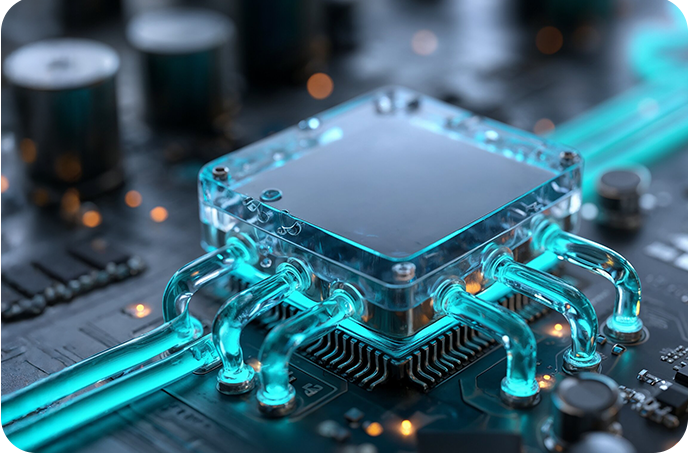
The limitations of air cooling in high-density environments have accelerated adoption of hybrid and liquid-based systems. These include rear-door heat exchangers, direct-to-chip liquid loops, and immersion cooling tanks – all of which require precise thermal modeling for deployment feasibility.
Without accurate modeling, these systems risk underperformance due to improper flow rates, incorrect heat exchanger sizing, or inefficient coolant distribution paths.
Yotta integrates advanced thermal engineering principles into its hyperscale infrastructure to support AI, HPC, and cloud-scale workloads. Its data centers are built with a multi-layered cooling architecture that combines efficiency, redundancy, and scalability.
Air-cooled chillers with adiabatic systems form the foundational cooling layer, optimizing energy use while maintaining stable thermal conditions across varying ambient environments. CRAH and fan wall systems are deployed at data hall perimeters with redundancy, ensuring uninterrupted cooling even during maintenance events or partial system failures. Inrow cooling units are placed near IT racks, enabling localized thermal control for high-density equipment and reducing airflow losses across the hall.
To support next-gen compute workloads, Yotta has implemented advanced high-density cooling systems. Rear door heat exchangers are used to manage rack densities of up to 50–60 kW by capturing heat directly at the rack exhaust point. For even higher thermal loads, direct liquid-to-chip cooling systems – developed in collaboration with hardware manufacturers, support up to 80 kW per rack using centralized or rack-specific cooling distribution units.
At the highest density tier, liquid immersion cooling systems provide near-total heat absorption efficiency, enabling safe and stable operation of ultra-high-performance compute clusters. Together, these systems ensure Yotta’s infrastructure remains future-ready, capable of supporting the evolving demands of AI model training, inferencing workloads, and large-scale distributed computing across India’s expanding digital ecosystem.