











Data Center
DPDP and Data Center Compliance in India: A 2026 Checklist for CIOs
Jyoti Malde
August 13, 2026

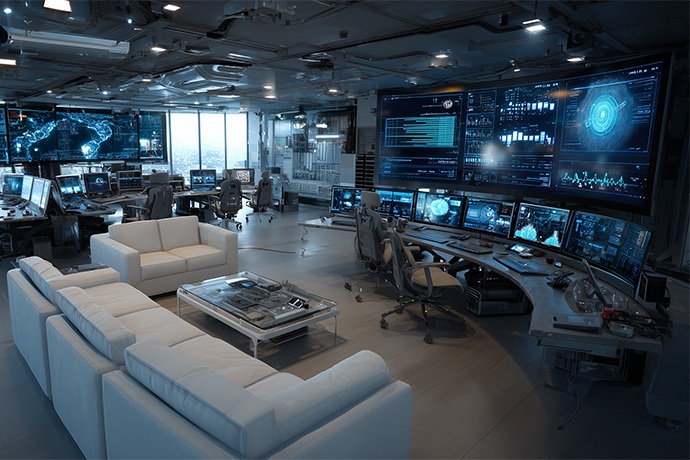
With AI driving massive computational growth, data centers are evolving into intelligent ecosystems that optimise performance, energy, and connectivity automatically. Today’s AI-driven workloads demand more than just space, power, and cooling; they require intelligent, adaptive infrastructure that behaves like a dynamic system, responding in real time to compute, storage, and networking demands. As AI adoption accelerates, data center networking for AI workloads and infrastructure design are evolving to keep pace, fundamentally reshaping how organisations build, operate, and scale their facilities.
AI workloads are unlike traditional enterprise applications. Training large language models, running deep neural networks, and executing real-time analytics require extremely high-throughput data transfer and ultra-low latency connectivity between GPUs, storage arrays, and compute nodes. As a result, AI-driven data center networks are becoming intelligent, adaptive, and workload-aware.
Modern data centers integrate AI algorithms to dynamically manage network traffic, balance load, and predict failures before they impact operations. These networks can automatically reroute data flows during peak periods, optimise resource utilisation, and ensure performance remains consistent even under unpredictable AI demand. This shift transforms networks from passive conduits into active systems capable of self-optimising for AI workloads.
The influence of AI extends beyond networking. AI impact on data center infrastructure is evident in several critical areas:
1. Power Management: AI workloads consume high-density compute power, which requires sophisticated power distribution and monitoring. AI-enabled systems can predict load patterns, adjust energy delivery in real time, and reduce energy waste.
2. Cooling Efficiency: Traditional cooling solutions are reactive, but AI-driven predictive cooling ensures optimal temperature and airflow, minimizing hot spots while reducing energy consumption.
3. Resource Scheduling: AI can orchestrate compute, storage, and network resources, ensuring the right capacity is allocated to workloads without over-provisioning.
4. Predictive Maintenance: Machine learning models analyse sensor data to forecast hardware failures, reducing downtime and improving operational reliability.
Not every organisation can build hyperscale AI-ready facilities. This is where colocation data centers become strategically important. Colocation enables enterprises to leverage shared, energy-efficient infrastructure with high-density networking, redundant power, and scalable compute resources, without the overhead of owning and maintaining a full-scale data center.
1. Rapid Deployment: Enterprises can colocate servers and GPU clusters immediately, avoiding months of construction and setup.
2. Scalability: Colocation allows incremental expansion, aligning infrastructure growth with AI workload demand.
3. Connectivity: High-speed interconnections to cloud services, Internet Exchanges, and multiple ISPs enable fast data transfer and hybrid AI deployments.
4. Operational Efficiency: Shared management of power, cooling, and security ensures optimised operations with lower energy and maintenance costs.
By adopting colocation, organisations can focus on AI innovation while leveraging sophisticated infrastructure optimized for AI workloads.
AI workloads demand intelligent data center services that enable seamless operations. Modern facilities now offer:
1. Advanced Monitoring: AI-driven telemetry tracks power, temperature, and network performance in real time.
2. Automated Orchestration: Resource scheduling, failover management, and network traffic routing are automated using predictive analytics.
3. Security Services: With AI analysing threats, data centers provide enhanced protection through continuous monitoring, anomaly detection, and threat mitigation.
4. Custom Fit-Outs: Flexible rack configurations and tailored support services accommodate unique AI infrastructure requirements, from dense GPU clusters to high-speed storage.
By combining these services with intelligent infrastructure, data centers are evolving from passive warehouses to proactive ecosystems capable of supporting high-performance AI workloads.
In a traditional data center, physical layout, racks, and cabling are the primary focus. AI workloads change that perspective. When data centers think like systems, they prioritise:
1. Dynamic Resource Allocation: Hardware, power, and network resources adapt in real time to workload needs.
2. Energy Efficiency: AI optimises energy delivery and cooling, balancing performance with sustainability.
3. Predictive Operations: Continuous data analysis anticipates bottlenecks, hardware failures, and network congestion.
4. Seamless Scaling: The facility expands capacity intelligently, reducing downtime and manual intervention.
This systems-level approach is essential for organisations running large-scale AI workloads, ensuring performance consistency, operational resilience, and cost predictability.
Leading organisations across industries rely on Yotta to host their critical IT infrastructure. Designed for AI-driven workloads, Yotta’s colocation facilities combine redundant power, dense network connectivity, and multi-layer security to deliver 100% uptime. With scalable rack space, hybrid cloud connectivity, and intelligent monitoring, Yotta ensures businesses can run high-performance AI operations without compromising on reliability or efficiency.
With Yotta’s infrastructure, enterprises gain access to purpose-built systems that adapt to AI demands, offering the flexibility, resilience, and efficiency required to scale AI initiatives on Indian soil. By choosing Yotta’s AI-ready colocation, companies can accelerate innovation while maintaining full control over their data and workloads.